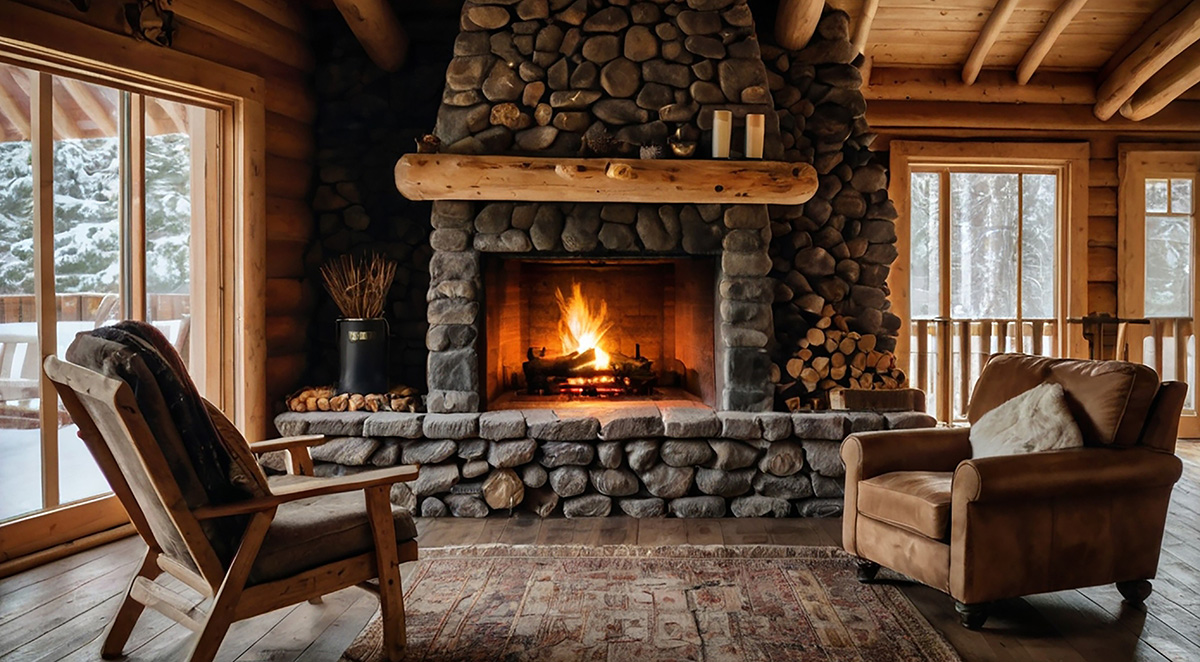
Gas and wood fireplaces offer warmth and ambiance, but they differ in installation requirements, operational costs, maintenance needs, and overall user experience. This comprehensive guide will help make this decision, which can save money and help you select the system that best fits your lifestyle and home. We will start by describing the two types of fireplaces and then offer cost, maintenance and lifestyle comparisons.
Gas Fireplaces
Gas fireplaces have become increasingly popular in Western North Carolina, particularly among homeowners seeking convenience without sacrificing ambiance. These systems burn either natural gas or propane to create flames that closely resemble traditional wood fires.
Types of Gas Fireplace Systems
Direct Vent Gas Fireplaces draw combustion air from outside your home and exhaust gases back outside through a sealed venting system. This design makes them highly efficient and safe for modern, well-insulated homes.
Vent-Free Gas Fireplaces don't require any external venting, making them easier and less expensive to install. However, they release combustion byproducts into your living space, which requires adequate room ventilation.
Gas Fireplace Inserts are designed to fit into existing masonry fireplaces, converting inefficient wood-burning systems into clean, efficient gas units. These are ideal for homeowners who want to maintain their traditional fireplace opening while gaining the convenience of gas.
Wood-Burning Fireplaces and Stoves
Wood-burning systems remain the traditional choice for many Western North Carolina homeowners who appreciate the authenticity, crackling sounds, and radiant heat of a real wood fire. Modern wood-burning appliances are far more efficient and cleaner-burning than older models.
Types of Wood-Burning Systems
Masonry Fireplaces are built on-site using brick, stone, or other masonry materials. While beautiful and long-lasting, they're the least efficient heating option and require the most extensive installation work, including foundation support and new chimney construction.
Prefabricated Wood Fireplaces are factory-built units that come with their own venting systems. They're less expensive than masonry fireplaces and can be installed in homes without existing chimneys.
Wood Stove Installation involves freestanding units that offer excellent heating efficiency and can be installed in various locations throughout your home. Modern EPA-certified wood stoves burn fuel more completely, producing more heat with less wood and significantly fewer emissions.
Wood Fireplace Inserts transform drafty, inefficient masonry fireplaces into powerful heating appliances. They fit snugly into your existing fireplace opening and use your existing chimney with a properly sized liner system.
Read our blog all about wood-burning fireplaces.
Installation Costs and Complexity
Gas Fireplace Installation
Gas fireplace installation typically costs less than wood-burning systems when factoring in all components. Installation requirements include:
- Gas line connection (either natural gas or propane tank)
- Venting system (for direct vent models)
- Electrical connection for ignition and blowers
- Minimal structural modifications in most cases
- Permits and code compliance inspection
Installation can often be completed in one to two days, depending on the complexity of gas line routing and venting requirements.
Wood-Burning System Installation
Wood stove installation and wood fireplace systems generally require more extensive work:
- Full chimney system installation (if not already present)
- Proper clearances from combustible materials
- Non-combustible hearth protection
- Through-wall or through-ceiling penetrations for chimney pipe
- Chimney liner installation for existing chimneys
- More extensive permitting requirements
- Code compliance inspections
Installation typically takes two to five days, depending on whether new chimney construction is required.
Operating Costs Comparison
Gas Fireplace Operating Costs
Gas fireplaces offer predictable, consistent operating costs based on your natural gas or propane rates. In Western North Carolina, typical operating costs for gas fireplaces range from $0.70 to $2.50 per hour of operation. Natural gas is generally less expensive than propane, but availability varies by location in our service area.
Wood-Burning Operating Costs
Wood-burning costs depend heavily on your wood source and availability. If you have access to your own wood supply, operating costs can be minimal beyond the labor of cutting, splitting, and seasoning. Purchasing firewood in Western North Carolina typically costs $150 to $300 per cord, with an efficient wood stove consuming two to six cords per heating season depending on usage patterns.
Heating Efficiency and Performance
Gas Fireplace Efficiency
Modern gas fireplaces offer impressive efficiency ratings:
- Direct vent models: 70-85% efficiency
- Vent-free models: 99% efficiency (all heat enters the room)
- Instant heat with thermostat control
- Consistent, adjustable heat output
- Zone heating capability
- Even heat distribution with optional blower systems
Wood-Burning Efficiency
Wood-burning efficiency has improved dramatically with modern technology:
- EPA-certified wood stoves: 70-80% efficiency
- High-efficiency wood inserts: 75-85% efficiency
- Traditional masonry fireplaces: 10-30% efficiency
- Radiant heat that warms objects and people directly
- Ability to heat large spaces effectively
- Performance depends on wood quality and burning technique
Maintenance Requirements: The Critical Difference
Gas Fireplace Maintenance
Annual Professional Inspection
Gas fireplaces require annual professional inspection to ensure safe operation. During this service, our highly trained technicians:
- Inspect gas connections for leaks
- Clean the burner and pilot assembly
- Check the ignition system
- Verify proper venting operation
- Test safety controls and sensors
- Clean the glass and interior surfaces
Ongoing Homeowner Maintenance
Gas fireplaces require minimal day-to-day maintenance:
- Keep the glass clean for optimal viewing
- Dust the interior occasionally when the unit is off
- Replace batteries in remote controls or wall switches
- Keep the area around the fireplace clear
Wood-Burning Fireplace and Stove Maintenance
Annual Professional Chimney Cleaning and Inspection
Wood-burning systems require annual chimney cleaning and inspection, which is more involved than gas fireplace maintenance. According to the NFPA and the Chimney Safety Institute of America (CSIA), chimneys should be inspected annually and cleaned when creosote buildup reaches 1/8 inch thickness. Read our blog about preventing chimney fires with good maintenance.
Regular Homeowner Maintenance
Wood-burning systems require significant ongoing maintenance:
- After Each Fire: Remove cooled ashes and dispose properly in metal container
- Weekly During Burning Season: Clean glass door and inspect for obvious problems
- Monthly During Burning Season: Check for creosote buildup and verify door seal integrity
Long-Term Component Replacement
Wood-burning systems require more frequent component replacement:
- Door gaskets: Every 1-3 years
- Baffle boards: Every 3-7 years
- Catalytic combustors (if equipped): Every 3-5 years
- Chimney liner: Every 15-25 years
- Firebrick: As needed when cracked or damaged
Creosote: The Hidden Maintenance Factor
One of the most significant differences between gas and wood systems is creosote management. Creosote is a byproduct of burning wood that accumulates in your chimney and poses serious fire hazards. Gas fireplaces don't produce creosote, eliminating this major safety concern and maintenance requirement entirely.
Read our blog all about creosote.
Day-to-Day Experience
Using a Gas Fireplace
Advantages:
- Push-button or remote control ignition
- Instant flame and heat
- Adjustable flame height and heat output
- No preparation or cleanup required
- Can be turned on and off at will
Limitations:
- May not operate during power outages (depending on model)
- Requires gas supply connection or tank refills
- Less authentic appearance than real wood fires
- No crackling sounds or wood smoke aroma
Using a Wood-Burning Fireplace or Stove
Advantages:
- Operates during power outages
- Independence from utility companies
- Authentic fire experience with crackling sounds
- Pleasant wood smoke aroma (outside)
- Romantic, traditional ambiance
Requirements:
- Proper wood preparation (splitting, seasoning)
- Manual fire starting with kindling
- 15-30 minutes to achieve full burn
- Requires monitoring and fuel addition
- Ash removal and disposal needed
Best Practices for Wood-Burning Systems
For the best wood-burning experience, follow these practices that we teach all our customers at Appalachian Chimney Service. Proper wood selection and preparation are essential for efficient, safe burning. Burn only seasoned hardwoods such as oak, maple, hickory, and ash, ensuring the wood has been dried for at least 6-12 months. Split wood to 3-6 inch diameter for optimal burning, and store wood off the ground and protected from rain. Avoid burning softwoods, which produce more creosote and can lead to dangerous buildup in your chimney.
Your burning technique is equally important for maintaining a safe, efficient fire. Start with small, hot fires using dry kindling, then build fires gradually, adding larger pieces as the fire establishes. Maintain proper air supply throughout the burn to ensure complete combustion. Avoid smoldering, smoky fires that produce excess creosote, and always burn fires hot enough to prevent creosote formation. Never burn treated wood, painted wood, or trash, as these materials release toxic chemicals and can damage your chimney system.
Making Your Decision
Choose a Gas Fireplace If You:
- Want convenience and ease of use above all else
- Prefer minimal maintenance requirements
- Don't have access to affordable firewood
- Want zone heating with thermostat control
- Live in an area with natural gas service
- Prefer consistent, predictable operating costs
Choose a Wood-Burning System If You:
- Enjoy the ritual and process of building and tending fires
- Have access to affordable or free firewood
- Want complete independence from utilities
- Prefer the authentic experience of real wood fires
- Don't mind regular maintenance and cleaning
- Want a backup heat source during power outages
Frequently Asked Questions
Can I convert my wood-burning fireplace to gas?
Yes, most wood-burning fireplaces can be converted to gas using a gas fireplace insert or gas log set. This requires a proper gas line installation and ensuring your existing chimney is suitable for gas venting. Our team can assess your specific fireplace and recommend the best conversion approach based on your goals and budget.
How much does it cost to install a gas fireplace vs. a wood stove?
Gas fireplace installation typically ranges from $3,500 to $8,000, including the unit, gas line work, venting, and installation labor. Wood stove installation ranges from $4,000 to $10,000, depending on whether new chimney construction is required. We recommend contacting us for a detailed estimate based on your specific home and requirements.
Do gas fireplaces need to be cleaned annually like wood-burning systems?
Yes, gas fireplaces should be inspected and serviced annually, though the maintenance is less extensive than wood-burning systems. Annual service ensures safe operation, verifies gas connections, and maintains warranty coverage. However, gas systems don't require creosote removal or the intensive cleaning that wood-burning systems need.
Which type of fireplace is more energy efficient?
Modern gas and wood-burning systems offer similar efficiency ratings (70-85%), but they distribute heat differently. Gas fireplaces provide more consistent, controllable heat, while wood-burning systems provide intense radiant heat. The most efficient choice depends on your home's layout, insulation, and how you plan to use the system.
Can a wood stove or fireplace heat my entire house?
This depends on your home's size, layout, and insulation. A properly sized and located wood stove can effectively heat 1,000 to 2,500 square feet of open living space. Gas fireplaces are better suited for zone heating rather than whole-house heating. We can assess your specific situation during a consultation.
What happens to my gas fireplace during a power outage?
Some gas fireplaces continue to operate during power outages, while others require electricity for ignition and blowers. Models with standing pilot lights and millivolt ignition systems can operate without power, though any blower fans won't function. Wood-burning systems operate completely independently of electrical power.
How do I choose between natural gas and propane for my gas fireplace?
Your choice typically depends on what's available at your location. Natural gas is more convenient and generally less expensive to operate, but it requires utility service to your property. Propane offers flexibility for rural locations without natural gas service but requires tank installation and periodic refills. We can help you evaluate the best option for your specific location in Western North Carolina.
Conclusion
Choosing between gas and wood fireplaces involves weighing convenience against tradition, evaluating maintenance commitments, and considering long-term operating costs. There's no universally "better" choice, only the option that best fits your specific lifestyle, home, and priorities.
At Appalachian Chimney Service, we're committed to helping Western North Carolina homeowners make informed decisions about fireplace installation Western NC. Our 27 years of experience with both gas and wood systems gives us unique insight into the real-world performance and satisfaction levels of each option.
Ready to explore your options for a new fireplace or wood stove installation? Contact Appalachian Chimney Service today to schedule a consultation. We'll assess your home, discuss your preferences, and provide detailed recommendations tailored to your specific needs and budget.